Peppers, tomatoes, beans, peas, lettuce, greens, raspberries, blueberries and, of course, okra.
Gardens at parishes, schools and other Catholic organizations are providing all that and more to people in need across the Archdiocese of Chicago, while growing their own communities and working to be better stewards of the Earth.
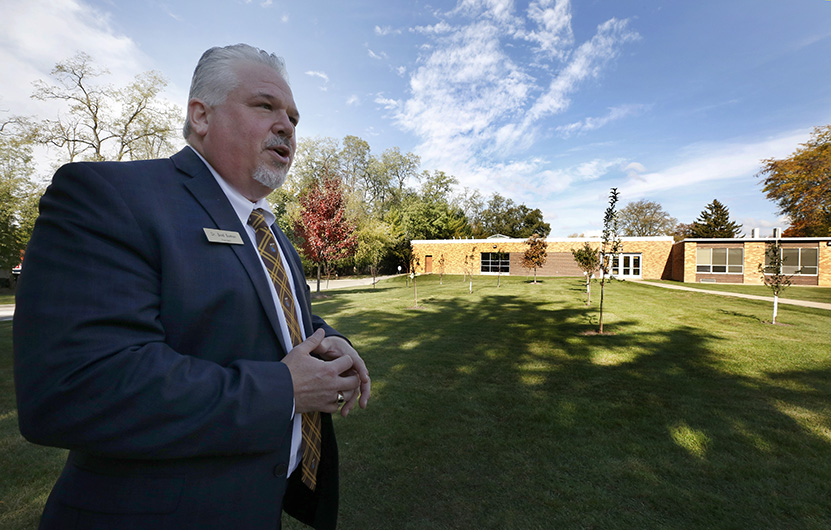
It is all connected, said Kambra French, chief mission officer for Carmel Catholic High School in Mundelein.
“It just felt like it was a very holistic opportunity for us to be in solidarity with our neighbors in a really meaningful way that involved us working to help grow these vegetables,” French said.
The school started Elijah’s Garden about five years ago as part of an archdiocesan effort to establish “Laudato Si’” gardens, French said. Such gardens, named for Pope Francis’ encyclical that calls for all people to care for “our common home,” were intended to foster an appreciation of and connection to creation.
The encyclical explicitly connects exploitation of natural resources to exploitation of and harm to marginalized people.
“I thought the garden was a really good opportunity to kind of holistically help our students engage with that,” French said.
Before the creation of the garden, Carmel students already helped with the St. Vincent de Paul food pantry at Santa Maria del Popolo Parish in Mundelein, going to the local Jewel food store to pick up donated food on Fridays and, time permitting, stocking the shelves of the pantry before its Saturday opening hours, she said.
Sometimes fresh produce is among the donated food, sometimes not, French said. So when the school started its garden, the pantry was a natural destination for the produce.
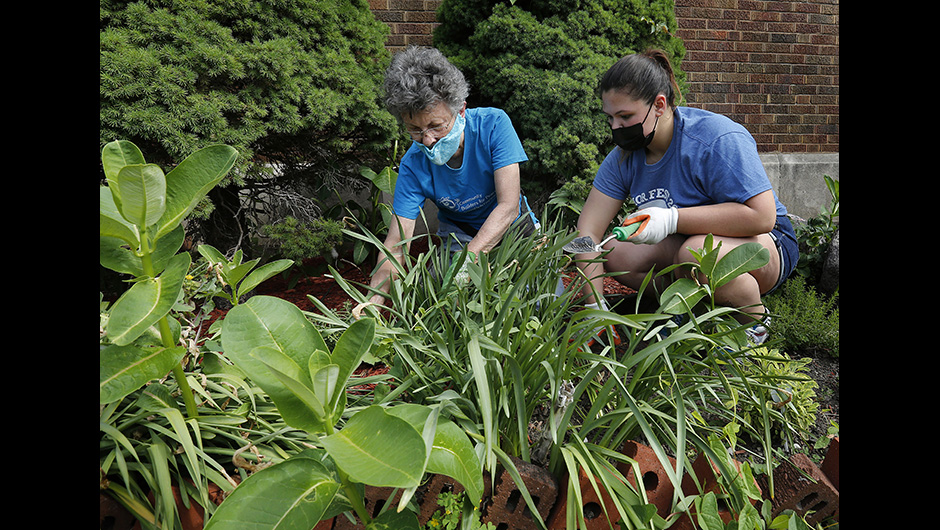
The garden is maintained by the garden club, whose members start seedlings indoors, plant them in the spring and come two days a week in the summer to maintain the garden and harvest produce.
Dennis Rowan, co-coordinator of the pantry at Santa Maria del Popolo, said the pantry’s clients appreciate the chance to get fresh vegetables and fruit.
“It’s wonderful,” he said. “We never expected it.”
Carmel’s garden includes one raised bed with raspberries, and Rowan said fruit goes the fastest of fresh produce.
That’s one reason the school used a grant from the Carmelite order to establish a small orchard on another area of the property, French said.
“Elisha’s Orchard” includes 20 fruit trees, including apple, peach, pear and plum.
Gardeners at Ascension-St. Edmund Parish in Oak Park said they grow okra at the request of the food pantries they serve.
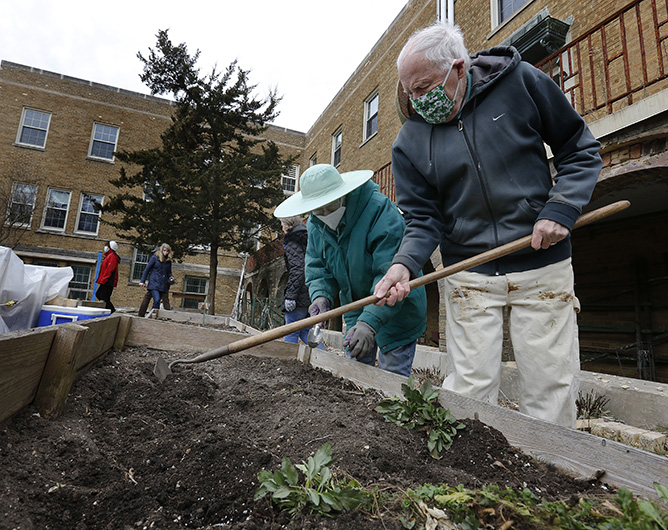
The parish has two garden ministries, since Ascension and St. Edmund both had established gardens sending produce to different food pantries when the two parishes united.
At Ascension’s Susan Fleming Community Garden, named for one of its founders, produce grown there as well as produce donated from parishioners’ home gardens goes to St. Simon of Cyrene Parish’s food pantry. At St. Edmund, the produce goes to Beyond Hunger, an Oak Park-based non-profit that serves surrounding communities.
“When we first started growing okra, they took me aside and said the pods were too big,” said John Owens, who helps coordinate the garden at Ascension. “They said they get tough.”
That means that okra, when it’s ripening, has to be harvested twice a week, said Michele Wheeler, who helps coordinate the St. Edmund garden. Wheeler has a degree in horticulture and has been growing vegetables for 49 years, she said.
Since the parishes united, the two garden ministries have maintained their separate plots, but they have come together to share ideas and tips.
The garden at Ascension is older, and it has donated more than 3,000 pounds of produce in a year, Owens said. The majority of that, about two-thirds, is grown elsewhere and donated.
At St. Edmund, the gardeners keep track of servings of food they have donated instead of pounds donated. The parish usually donates 1,500 to 1,700 servings of fresh vegetables each year, said Nora Abboreno, who also helps coordinate the garden at St. Edmund.
“I feel very strongly that this is ministry,” Abboreno said. “We are not a garden club, we are a garden ministry. We are a food ministry. We center ourselves with that thought. We are moving our prayer forward as we work in the garden.”
At the Quinn Center of St. Eulalia Sacred Heart Parish, next to St. Eulalia Church in Maywood, gardens line the sidewalks. Neighbors and community members should feel free to take what they want from the garden, said Nicole Molinaro, who coordinated the gardens.
The center aims to promote health, resilience, education and human connections in Proviso Township, and the garden is woven through its programs. Children and teens who participate in youth programs help plant and harvest and learn about what keeps a garden healthy, and produce is given away to guests of the center’s communal dinner program or drive-thru meal distribution.
The garden is blessed every year during “Cultivate Quinn,” a kind of combined garden volunteer work day and block party that takes place in May, said LaToya Towns, the Quinn Center’s program director.
“It’s just this big space for community and church to come together,” Towns said. “This year was one of our biggest and best years in terms of having so many hands from the parish and from our community.”
Events like Cultivate Quinn draw people who are new to gardening to the center and give them an idea of what they can grow in their own space, whether they have space for a backyard garden or a pot of herbs on their porch, she said.
Molinaro, who has a horticulture degree from Triton Community College, focuses on not just providing fresh produce but teaching people in marginalized communities how to grow their own vegetables contributes to environmental justice.
“That’s what we’re trying to get towards, building this community of people around plants,” Molinaro said. “We’re creating a knowledge base. People used to think that growing food and having a garden was hippie stuff. We get to live and eat and breathe and drink water because of plants and the food that they provide.”
The idea that all people must work toward protecting the Earth so that people can flourish is central to the message of “Laudato Si’,” and the garden at the Quinn Center was dedicated as a Laudato Si’ garden in 2021.
So was the Susan Fleming Garden at Ascension, and Elijah’s Garden at Carmel Catholic High School. The Ascension garden is home to a little free library, and Owens said he tries to make sure it always includes a copy of “Laudato Si’.”
“I have to keep replacing them,” he said. “People are taking them.”