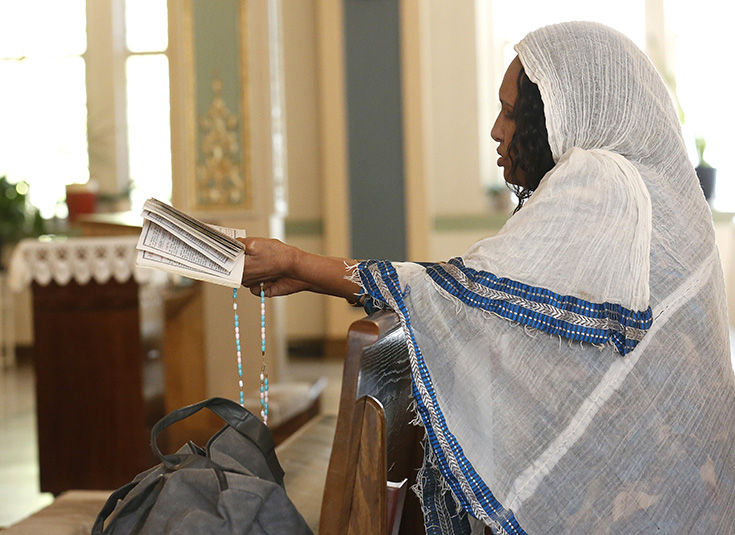
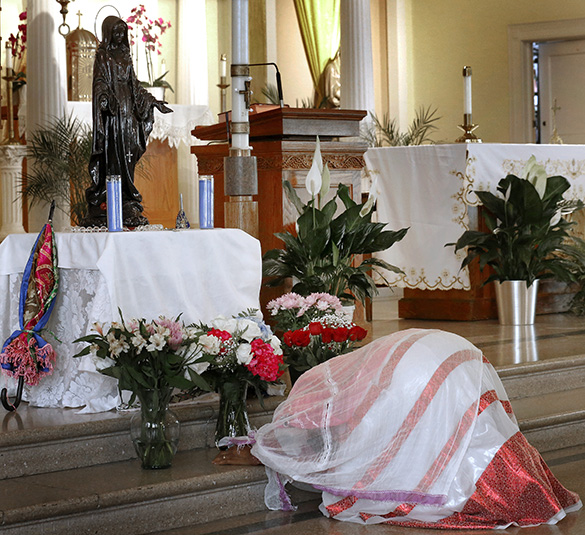
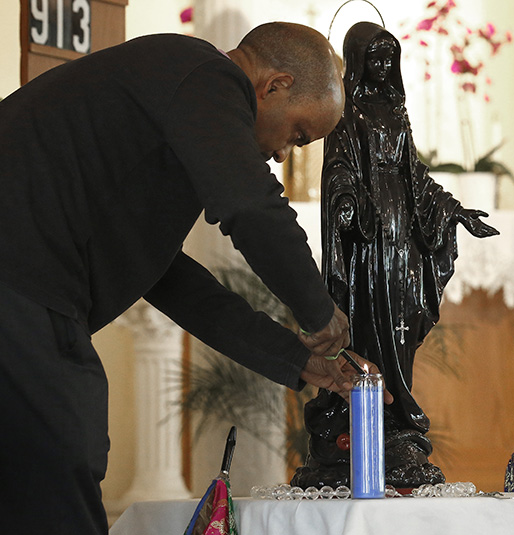
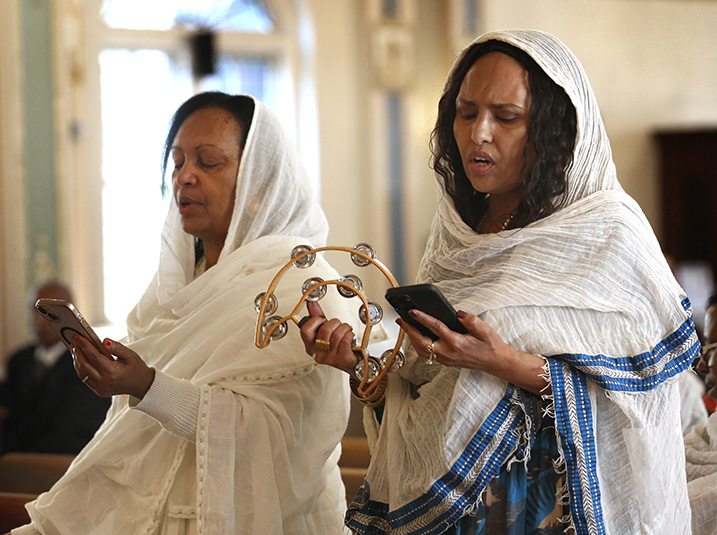
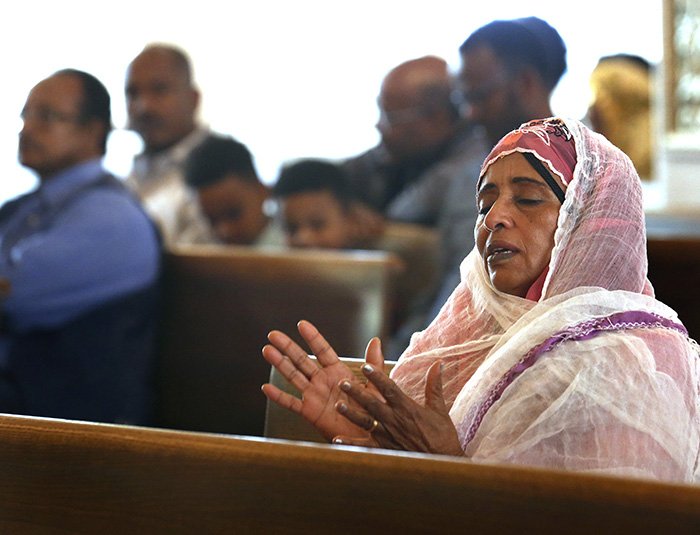
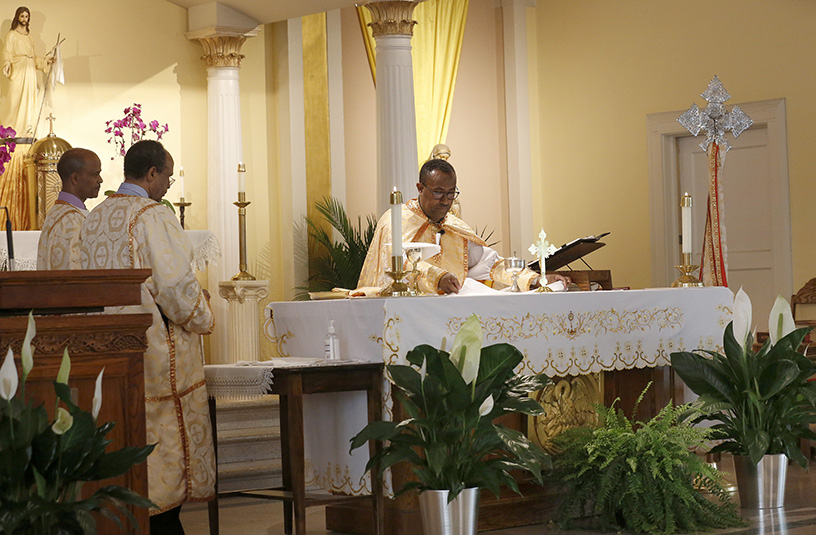
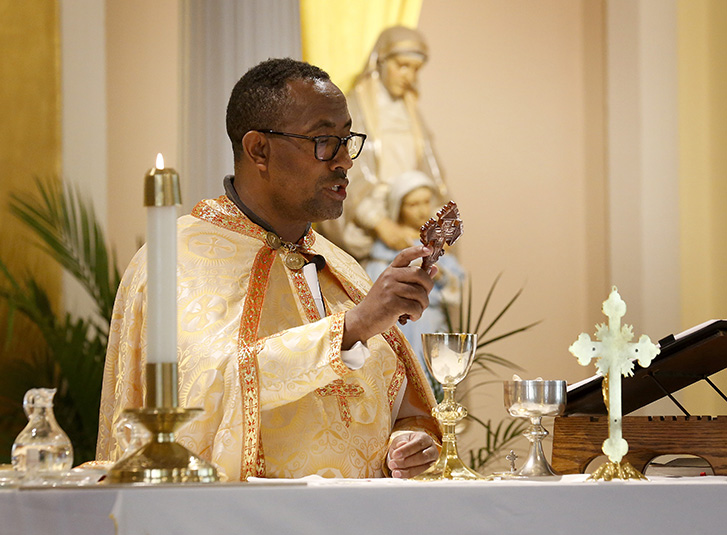
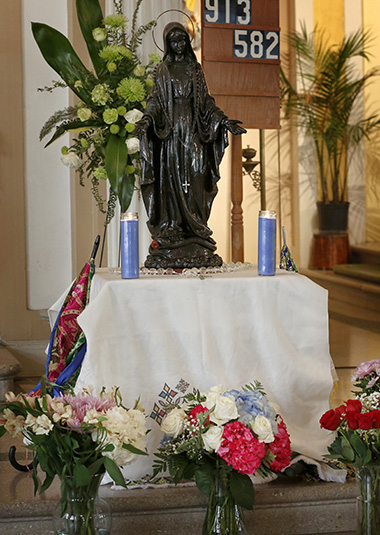
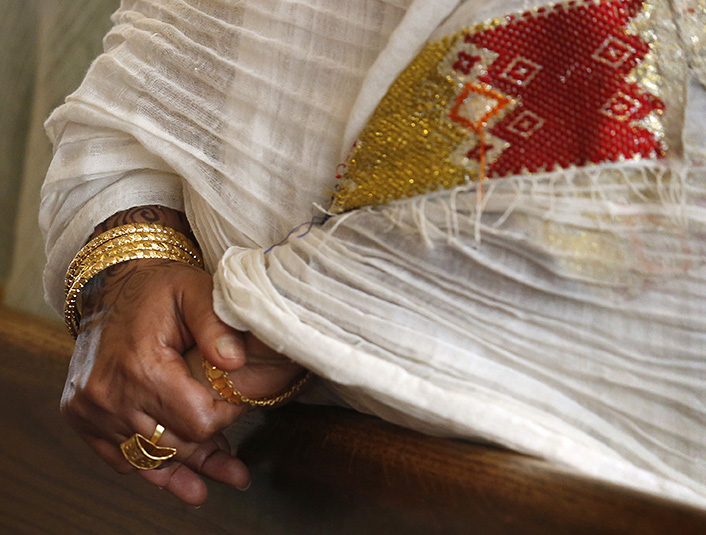
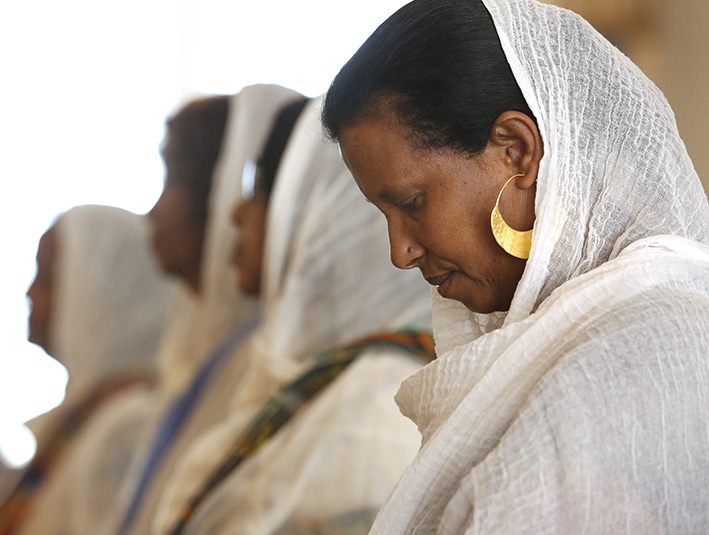
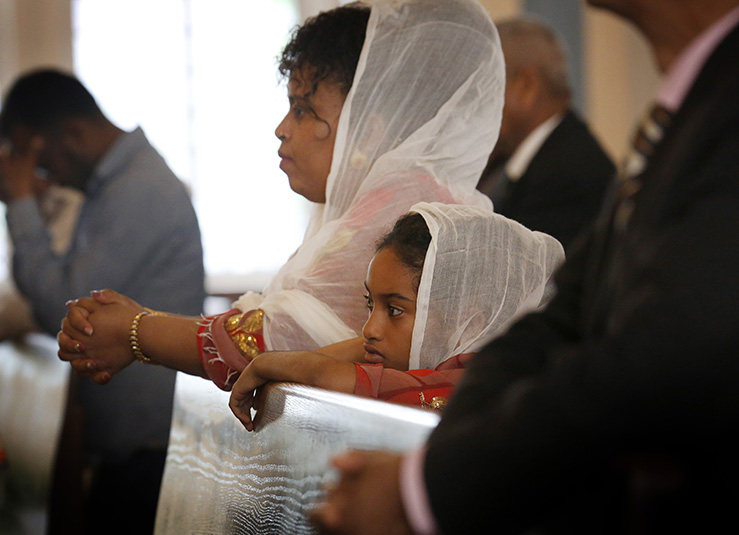
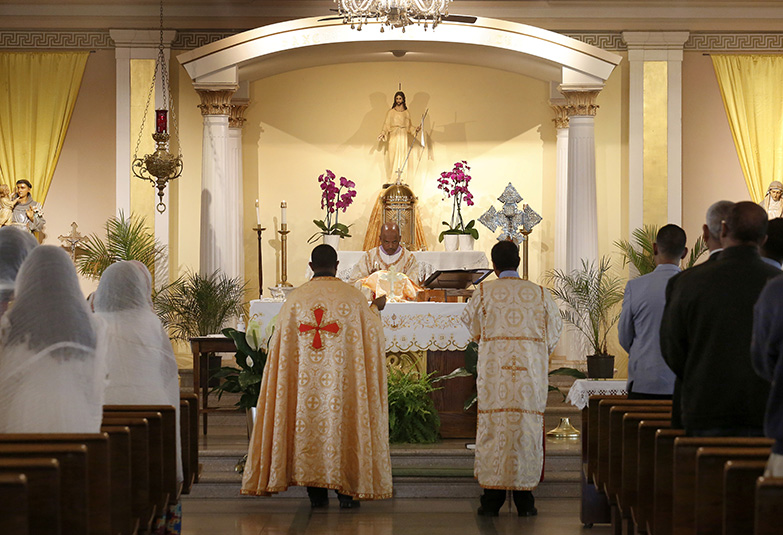
Love for Mary is universal; that was evident as Eritrean Catholics gathered at St. Thomas of Canterbury Church, 4827 N. Kenmore Ave., on the morning of May 2 for Mass to celebrate Mariam Dearit, the largest Marian feast day of the year in their home country.
Catholics in Eritrea have a special connection to the Blessed Mother through the Mariam Dearit Shrine, which houses a bronze statue of the Virgin Mary inside the trunk of an ancient baobab tree. Catholics and non-Catholics alike come together in Eritrea for the feast day on May 29.
The devotion to Mary in Eritrea dates back to 1869 when the Daughters of Charity opened an orphanage. They were given a bronze statue of Mary that was placed in the tree shrine. Miracles attributed to Mary’s intercession at the shrine spread devotion to her.
In Eritrea, Mariam Dearit ranks up there with Christmas, said Tebe Ogba.
“As a child, as a little girl, that’s one of the things I looked forward to, the celebration of Marian Dearit,” Ogba said. “It’s the best memory of every child.”
People from all over the country, and from Eritrea’s neighbors Ethiopia and Sudan, make pilgrimages to the shrine for the feast each year. Muslims and members of the Orthodox Church also join the Catholics for the celebration, Ogba said.
“Mary is the one you can call when anything is happening in your life,” Ogba said. “You can call to her and to God.”
Motherhood is very important in Eritrean culture and Mary represents the ultimate mother, Ogba explained.
“She’s the best bridge for us to God,” she said.
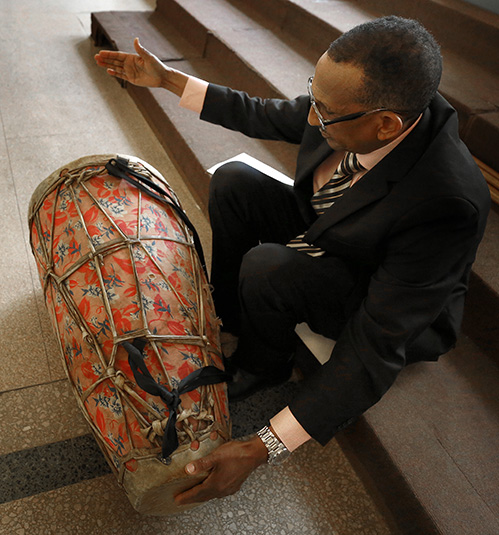
The Eritrean Catholics who worship at St. Thomas of Canterbury Church are one of the 23 Eastern-rite Catholic communities who have their own unique liturgies while being in communion with Rome. The Ge’ez Mass lasts almost three hours and is filled with chant and music from drums and other instruments.
Members of the community have home parishes in the archdiocese but also gather together once a month at St. Thomas. Many travel from outside the archdiocese, including from Milwaukee, to attend the Mass.
Mary, Mother of God Parish is the only place in the Chicago area where Mass is celebrated in this rite; Orthodox Eritreans have their own church.
The parish has long been home for a melting pot of communities. It was the first parish to welcome the Vietnamese Catholic community, which is still active at the parish. Catholics from Cuba, the Philippines and Burma also have a regular presence at the parish, along with those from other countries.
About 100 Eritrean families gather at St. Thomas for Mass when a priest is available, or for prayer. Comboni Missionary priests often celebrate the Mass, but priests who are in Chicago to study at Catholic Theological Union or DePaul University, for example, will also offer Mass for them when they are here, explained Tesfamari Kefle.
The community was welcomed at St. Thomas in 1981. Many Eritreans fled during the war of independence from Ethiopia around that time and settled in the Uptown neighborhood, which is home to many agencies supporting refugees.
“One of the things about being Catholic is it is so universal, you don’t have to ask what. If you know it is a Catholic church, you just attend,” Kefle said.
Kefle is a native of Eritrea and was studying at Catholic Theological Union and working with refugees at the time. He recalled the pastor of St. Thomas reaching out to the community and offering spiritual support.
“All of the pastors have been open, and they knew we had our own liturgy and our own priests,” he said.
East African cultures are very clan focused, Ogba said, so there is a strong sense of family among the people who worship at St. Thomas.
“We are a community, but we are also family to each other,” Ogba said. “Here, most of us are not blood-related but we are faith-related.”
Being able to worship with people from their home country and in their own rite is a comfort for the loneliness people might feel, she said.
“When you’re an immigrant, you get disconnected from your roots. This, it doesn’t take the place, but it helps you feel connected to each other,” Ogba said.